HOT Search
Hot News

Product recommendation
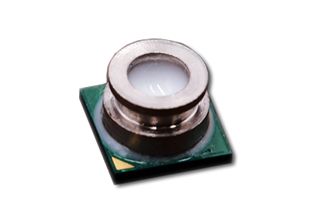
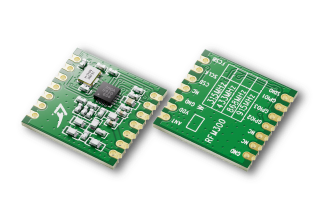
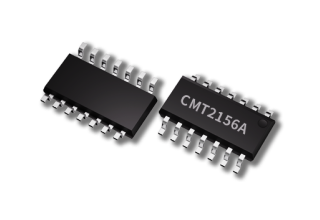


With the rapid popularization of smart homes, smart buildings, and various wireless control terminals, the problem of frequent power replenishment and maintenance of these devices is becoming increasingly prominent.
Traditional battery-powered wireless control devices , after large-scale deployment, not only require regular maintenance and frequent battery replacements , but also face the burden of reliability degradation and environmental pollution .
Against this backdrop, wireless control solutions capable of "self-powering" have become one of the important development directions in the industry .

"self-generated" wireless control scheme refers to converting the mechanical energy (micro-kinetic energy) generated when the administrator presses/flips the switch into effective electrical energy through an energy conversion scheme (electromagnetic induction/piezoelectric effect).
This wakes up the micro-energy harvesting and transmitting chip integrated in the switch device, puts it into working mode, and directly triggers the chip's built-in hardware logic to complete the transmission of wireless control signals.
This allows administrators to achieve a wireless remote control experience that is "battery-free, wiring-free, and instant-on".
In self-generated wireless control scenarios, the instantaneous electrical energy converted when pressing/toggling the switch is extremely limited. Therefore, to successfully transmit control signals, it is necessary to significantly reduce chip power consumption and improve the chip's radio frequency link efficiency.
Sub-GHz micro-energy harvesting transmitter chips operate in low-frequency bands such as 240MHz to 960MHz. When combined with simple and efficient modulation methods such as OOK, they can significantly reduce the instantaneous energy consumption when transmitting control signals.
This ensures that control commands can still be accurately delivered in complex indoor environments with lower transmission power, making them the key "core" of the "self-generated" wireless control solution.

In terms of system architecture, Sub-GHz micro-energy harvesting and transmitting chips often integrate radio frequency transmission, data encoding and control logic into a single chip through a highly integrated architecture design, so that a complete and reliable wireless signal transmission process can be completed under extremely limited energy budget without the need for an external MCU.
The moment the administrator touches the switch, the Sub-GHz micro-energy harvesting and transmitting chip does not need to go through a complex power-on initialization or software wake-up process.
Instead, the internal hardware logic directly completes the signal encoding and radio frequency transmission. The entire system only works at the moment of triggering, with no standby power consumption, which can minimize energy loss.
Furthermore, compared to 2.4GHz wireless communication technologies such as Wi-Fi and BLE, signals in the Sub-GHz band have advantages in wall penetration, diffraction, and interference resistance, maintaining a stable communication link even in complex indoor environments with multiple walls and devices.
This stability is particularly crucial for self-generated wireless control that allows for instant activation, effectively preventing a decline in user experience caused by lost control commands or response delays.
It is worth mentioning that in the scenario of self-generated wireless control, a Sub-GHz micro-energy harvesting and transmitting chip that is truly suitable for kinetic power supply scenarios not only needs to achieve stable transmission under extremely low energy budget, but also should have a highly integrated architecture, mature and universal coding support, and flexible parameter configuration capabilities to reduce system complexity and improve the efficiency of large-scale applications.
For example, HOPERF's self-developed CMT2156B is a high-performance OOK RF transmitter that supports external kinetic energy harvesting and power supply.
The CMT2156B integrates commonly used 527 and 1527 encoders, directly replacing common encoder chip solutions such as xx527, xx1527, and xx2240.
Furthermore, the CMT2156B supports user-defined encoders, allowing users to optimize their designs according to specific needs, making it particularly suitable for kinetic-powered, battery-free wireless transmission applications.

As shown in the figure below, the CMT2156B directly generates RF signals through a fully integrated low-noise integer frequency synthesizer, enabling stable frequency output.
It employs a single-pin crystal oscillator design and integrates the necessary load capacitor internally, effectively reducing the number of external components and simplifying system design.

CMT2156B - Functional Module Diagram
During each power-on reset (POR), the CMT2156B's internal analog module automatically calibrates based on its built-in reference voltage source, ensuring stable and reliable performance under varying temperature and power supply conditions. During data transmission, the CMT2156B is directly triggered by a button press.
The modulated data is then transmitted via a high-efficiency power amplifier, with the transmission power flexibly configurable in 1 dB steps from 0 to +13 dBm.

Diagram of accessing built-in EEPROM
In addition, developers can quickly program the frequency, output power and other product parameters into the chip's built-in EEPROM using the official USB Programmer and RFPDK, which can greatly simplify development and production costs; or, developers can directly use the stock of 433.92 MHz and other default parameters for production, eliminating the production programming step.

https://www.hoperf.com/service/apply/
If you are interested in HOPERF's Sub-GHz micro-energy harvesting transmitter chip CMT2156B or other wireless transmission chips/modules, please scan the QR code above or copy and open the link at the end of this article to apply for samples. We will be happy to serve you!