HOT Search
Hot News

Product recommendation


In the Internet of Things (IoT) industry, wireless communication capabilities are the underlying foundation for interconnectivity between devices.
From smart meters and urban lighting to industrial sensor networks and power distribution automation, a large number of devices require low-power, stable, and reliable data transmission capabilities.
However, with the continuous expansion of device connectivity, how to achieve wider coverage and higher network capacity while ensuring communication stability, and minimizing system deployment and maintenance costs, has become a critical challenge that urgently needs to be addressed in wireless network systems.

Among numerous wireless communication protocols, Wi-SUN (Wireless Smart Utility Network) is a low-power wide-area communication solution designed for large-scale networks.
Based on the IEEE 802.15.4g/e standard, it features self-organizing networking and self-healing routing capabilities, supports multi-channel communication mechanisms with frequency hopping , and allows for large-scale access of communication nodes.
It effectively ensures network communication quality, achieving communication coverage of several kilometers, and is suitable for applications such as infrastructure for building smart cities and smart grids, and advanced road transportation systems.
In practical engineering applications, how to quickly build stable and reliable Wi-SUN terminal devices is a significant challenge for many development teams.
Traditional wireless product development often requires a substantial investment of time in RF circuit design, network matching and debugging, and overall wireless performance optimization.
This not only places high demands on the RF design capabilities of the development team but also significantly extends the product development cycle.
However, with the increasing demands of IoT applications, modular wireless solutions have gradually become an important choice for developers to improve R&D efficiency.

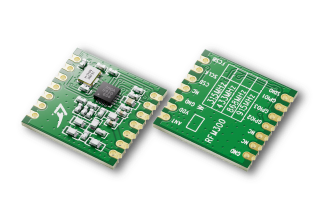
For example, the RFM25A12 is a high-performance Sub-GHz SoC wireless transceiver module launched in this context.
This module operates in the 470~915MHz frequency band, supports Wi-SUN multi-rate OFDM, FSK, and OQPSK modulation, and features an integrated PA with a transmit power of up to 16dBm.
It also boasts 1152KB Flash, 256KB RAM, and up to 35 GPIO pins, enabling it to not only meet the operational requirements of complex wireless communication protocols but also provide ample system resources for terminal application development.
The RFM25A12 features pre-designed RF circuit layout and matching optimization, and has undergone rigorous RF performance verification, significantly lowering the barrier to product development.
Developers do not need to redesign the RF circuitry of the verification module; they can build a stable and reliable hardware foundation by directly integrating the module, greatly shortening the product development process and accelerating time-to-market.
Beyond hardware convenience, the RFM25A12 also offers developers a high degree of flexibility in its software architecture. Unlike modules equipped with the complete Wi-SUN protocol stack, the RFM25A12 only provides physical layer communication capabilities, allowing developers to build or customize the upper-layer protocol stack according to specific application needs, thereby achieving a more ideal balance between resource consumption and system performance.
This architecture provides developers with significant optimization opportunities. For example, in remote meter reading systems, developers can optimize routing mechanisms based on the actual network scale, reducing unnecessary protocol processing overhead, and extend the operating time of battery-powered devices by adjusting node communication strategies and sleep mechanisms.
In large-scale IoT systems, flexible resource allocation capabilities can effectively avoid system resource waste, enabling devices to achieve more stable operation under limited hardware conditions.
It's worth noting that the RFM25A12 not only supports the Wi-SUN protocol but is also compatible with multiple proprietary protocols such as Connect, Sidewalk, and WM-BUS, making it a core communication unit for large-scale low-power wide-area networks.
This multi-protocol compatibility allows a single hardware platform to serve different types of IoT products, helping device manufacturers reduce R&D investment and simplify supply chain management.
For enterprises that need to deploy products in different regions or application scenarios, a unified hardware platform can also significantly reduce system development and maintenance costs.
In terms of network performance, the RFM25A12 supports OFDM modulation technology. This modulation method enables higher data transmission efficiency within limited bandwidth and maintains good anti-interference capabilities in complex wireless environments.
For example, in smart metering systems, OFDM technology can support more frequent data collection and higher data transmission rates, thereby helping energy management systems obtain more accurate real-time data.
Combined with the mesh network structure of the Wi-SUN protocol, the RFM25A12 can build wireless communication networks with extremely wide coverage and massive network capacity.

In practical deployments, a single Wi-SUN network can support thousands of nodes and achieve wide-area coverage through multi-hop communication. When some nodes or links in the network fail, the system can automatically reselect communication paths, thus ensuring the continuous and stable operation of the entire network.
This self-organizing and self-healing capability makes Wi-SUN networks particularly suitable for large-scale application scenarios such as smart city infrastructure and energy management systems.

Technical advantages of Wi-SUN networking
In addition, in terms of security, the Wi-SUN network uses AES-128 encryption technology and ensures that only authorized devices can access the network through identity authentication and key management mechanisms. This effectively resists common wireless attacks such as replay attacks and packet injection, protecting communication privacy.

https://www.hoperf.com/service/apply/
If you are interested in HOPERF' Sub-GHz SoC module RFM25A12 or other wireless communication chips/modules, please scan the QR code above or copy and open the link at the end of the article to apply for samples. We will be happy to serve you!.