HOT Search
Hot News

Product recommendation


For ordinary consumers, smart home technology is more of a consumer choice to improve the quality of home life, enhance the intelligence of devices, and optimize human-computer interaction efficiency. They hope to get a higher quality living experience after paying money and time, rather than facing communication protocols that are difficult to unify, incompatible ecosystem platforms, and cumbersome device configuration processes. These problems not only raise the threshold for consumers to use the technology, but also hinder the widespread adoption of smart homes .

by the Connectivity Standards Alliance (CSA) and leading smart home ecosystem manufacturers such as Apple, Google, Samsung, and Amazon, is a key to breaking this industry dilemma. Matter is a universal communication protocol based on IPv6 designed to build smart home devices. It defines the application layer specifications, data models, and interaction logic deployed on the devices, enabling cross-brand, cross-communication protocol, and cross-ecosystem interoperability between smart home devices.
The Matter protocol: the "key" to interconnectivity in smart home networks.
As shown in the diagram below, Matter is not a completely new protocol. It reuses the mature TCP/IP protocol suite (TCP/UDP are transport layer protocols, and IPv6 is the network layer foundation). It is a unified standard at the application layer and is compatible with underlying communication protocols based on IP technology such as Wi-Fi, Thread, BLE, and Ethernet. It can also be connected to other protocols such as Zigbee and Z-Wave through a bridge. Devices that integrate the Matter protocol can not only seamlessly integrate into various mainstream ecosystem platforms, but also enable these devices to achieve true " interconnection, interoperability, and interoperability " .

Matter protocol stack and network topology diagram
In terms of ecosystem compatibility, the Matter protocol's multi-administrator function allows the same smart home device to be controlled by multiple ecosystem platforms simultaneously without repeated network configuration. The multi-administrator function is a core feature of the Matter protocol in realizing the vision of user freedom of choice and interoperability .
Previously, if a smart home device wanted to connect to multiple ecosystems, developers had to adapt and develop separately for each ecosystem platform, which was not only time-consuming and laborious but also usually had limited effects . However, devices that support Matter can achieve "one-time network access, multi-device control" - consumers only need to configure once to connect the device to the ecosystems of Apple, Google, Samsung, Amazon and other companies at the same time , without having to go through the hassle of repeated " tinkering " .
In terms of device configuration, since the Matter protocol unifies the networking, configuration, authentication and access process of smart home devices, consumers can easily connect their devices to the ecosystem network by simply scanning a code with their mobile phone/NFC/manually entering the configuration digital code. They no longer need to study compatibility, consult manuals, or even ask technical experts to complete the device configuration process.
In terms of reliability and stability, the Matter protocol is based on local network communication. Smart home devices are directly interconnected within the home LAN. When consumers perform human-machine wireless interaction, control commands are transmitted directly to the devices within the local network. There is no need for the traditional control process of "command → router/gateway → cloud → router/gateway → device execution ", and there will be no more delayed response, network outages or loss of control.

A schematic diagram of a smart home network under the Matter protocol. (Source: CSA Alliance)
Furthermore, the Matter protocol was designed with compatibility with older devices in mind. By upgrading the software of smart speakers, displays, network devices, and smart terminals already in millions of homes, consumers can enable Matter functionality on their existing devices. In short, the Matter protocol not only promotes the interconnectivity of smart homes but also lowers the barrier for users to participate in ecosystem upgrades , serving as a universal foundation for the future development of smart homes.
Matter module: A universal foundation for the development of smart homes
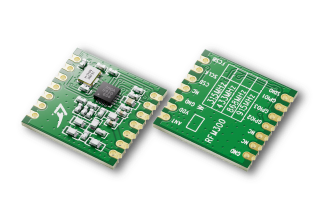
To promote the rapid implementation of the Matter protocol and stimulate the vitality of the smart home ecosystem, HOPERFelectronics, as a Participant member of the Connectivity Standards Alliance (CSA) and one of the earliest high-tech enterprises in China to engage in the Matter field, has carefully developed and launched a series of Matter wireless communication modules with high performance, high cost-effectiveness and high maturity.
For example, the HM-MT2401 is a Matter over Thread wireless communication module based on the 2.4GHz band, which can enhance device communication distance, optimize device power consumption, and improve device communication security. It has been widely used in smart home devices such as LED lights, wireless switches, smart door locks, smart doorbells, smart thermostats, and smart sensors that have requirements for low power consumption, low bandwidth, and small data transmission.

The HM-MT2401 is equipped with a high-performance, highly integrated EFR32MG24 RF processing chip, which embeds a low-power 32-bit ARM® Cortex®-M33 processor core, 1536kB Flash and 256kB RAM, as well as a rich set of peripheral interfaces, enabling rapid development of Matter over Thread terminal devices.
The HM-MT7201 is another Matter over Wi-Fi wireless communication module based on the 2.4GHz band, which supports real-time data transmission and cloud interaction between devices. It has been widely used in smart home devices such as HD cameras, audio devices, and video doorbells that require continuous power supply, low latency, high bandwidth, and large data transmission.

The HM-MT7201 employs an advanced design framework and manufacturing process, and is a highly integrated single-chip Wi-Fi 802.11b/g/n and Bluetooth Low Energy (BLE) solution. It integrates an onboard antenna, a 32-bit MCU, and a comprehensive set of peripheral interfaces, which can be used to quickly develop Matter over Wi-Fi terminal devices.

https://www.hoperf.com/service/apply/
If you are interested in HOPERF's independently developed Matter modules, please scan the QR code above or copy and open the link at the end of the article to apply for samples. We will be happy to serve you!