HOT Search
Hot News

Product recommendation
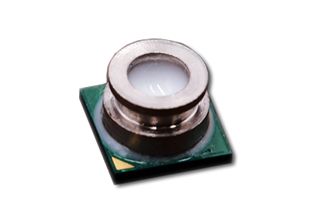
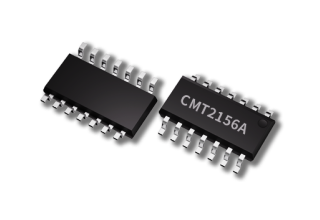


In the context of the Internet of Everything era, the IoT industry is experiencing a double explosion in device scale and application density. The continuous access of massive IoT terminals to the network is putting unprecedented pressure on wireless communication links. At the same time, the demand for data transmission is also growing exponentially, placing higher demands on communication speed, real-time performance, stability, and system response latency. Traditional wireless transmission methods can no longer meet the core communication requirements of massive IoT terminals for low power consumption, high reliability, and wide coverage.

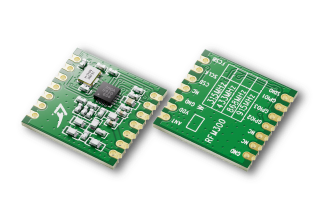
Against this industry backdrop,HOPERF has launched a new Sub-GHz wireless RF transceiver module, the RFM300L, which simultaneously features low power consumption, strong anti-interference capabilities, wide coverage, and high stability. It is a Sub-GHz RF transceiver platform developed specifically for modern IoT applications, designed for large-scale deployment, efficient transmission, and low-power operation. It can effectively support the stable communication needs of IoT terminals under long-term operation, complex electromagnetic environments, and large-scale node collaboration.
In terms of transmission performance, the RFM300 L has a maximum transmit power of +20 dBm and supports flexible adjustment according to different application scenarios, which can meet the needs of long-distance communication while avoiding unnecessary energy waste. The RFM300 L has a receiver sensitivity of up to -120 dBm@2 kbps 433.92 MHz FSK, which can accurately capture weak signals, greatly improve the signal reception capability in complex environments, and significantly extend the effective communication distance of IoT terminals.
In terms of operating power consumption, the RFM300L has a typical receiving current of only 8.5 mA and a standby current as low as 0.3 μA. It also supports Duty-Cycle mode, which can significantly extend the battery life of battery-powered IoT terminals through periodic wake-up strategies. It is especially suitable for IoT terminals such as smart water meters, gas meters, and outdoor environmental sensors that are difficult to replace batteries frequently, significantly reducing later maintenance costs and manpower investment.
In terms of rapid development, the RFM300L integrates rich interfaces and configuration capabilities, with a built-in 64-byte Tx/Rx FIFO, multiple GPIOs and interrupt mechanisms. It also supports functions such as channel listening, high-precision RSSI, fast frequency hopping, and squelch output. At the same time, it is equipped with an SPI communication interface that can be easily connected to the master controller, making hardware development more free and flexible. Users only need to combine it with simple data decoding design to quickly realize the mass production and deployment of wireless products.

RFM300L Typical Application Circuit Diagram
Note: The π-type matching circuit parameters of the ANT pin in the above diagram are the default values. Please match the specific parameters according to the corresponding antenna.
In terms of scenario coverage, based on its comprehensive advantages in transmission performance, power consumption control and ease of development, the RFM300L can meet the wireless communication needs of a variety of typical industries, especially suitable for scenarios such as automatic meter reading, smart home and security, industrial monitoring and wireless control, ISM open band wireless data communication, long-range remote control, wireless sensor nodes and tags, etc. It can be easily integrated into both large-scale industrial deployments and consumer electronic devices.

Typical application scenario diagram of RFM300L
In terms of product size, the RFM300L measures only 12*12*2.3mm. Its compact packaging design not only reduces the overall size of terminal products and lowers the difficulty of hardware structure design, but also allows for the compatibility of more functional components within a limited PCB board space. This provides greater flexibility for the miniaturization and integration design of IoT products, helping terminal manufacturers to quickly launch products with lighter and thinner forms and more compact layouts.
Currently, the RFM300L is available in multiple versions at 433.92MHz, 868MHz, and 915MHz, covering different regional regulations and market demands. Since its launch, it has brought more cost-effective, higher-performance, and more reliable options to the wireless communication market. It is not just a communication module, but also a set of underlying wireless capabilities supporting the long-term development trend of the Internet of Things (IoT), helping various smart devices move towards a new stage of lower costs, higher stability, and longer lifespans.

https://www.hoperf.com/service/apply/
If you are interested in HOPERF's independently developed miniaturized Sub-GHz RF transceiver module— RFM300L —or other products, please scan the QR code above or copy and open the link at the end of the article to apply for samples. We will be happy to serve you!