HOT Search
Hot News

Product recommendation


In the field of smart homes, mainstream short-range communication solutions such as Wi - Fi, Bluetooth, Zigbee, and Z - Wave have been widely used in various home devices.
They each have their own focus in terms of power consumption, security, and cost, but they all have the shortcoming of limited coverage, making it difficult to cover the perimeter areas of a residence such as garages, courtyards, porches, and gardens.
At the same time, outdoor sensors/actuators that rely on battery power usually require additional signal boosters to achieve long-distance connections, which not only increases the deployment cost of smart homes but also increases the complexity of installation.

LoRa, a communication technology based on Chirp Spread Spectrum (CSS) modulation, can support long wireless communication distances under low power conditions , effectively making up for the shortcomings of existing short-range communication solutions in terms of coverage distance and adapting to the integrated indoor and outdoor networking needs of smart homes.
Currently, smart home communication systems based on LoRa solutions have been widely used in various sensor facilities, all of which can achieve stable access throughout the entire home area based on a single LoRa gateway, without the need for dense deployment of repeaters or signal amplifiers.
As shown in the figure below, LoRa mainly encodes data through a linearly varying " chirped signal , " which makes the signal exhibit extended characteristics in the frequency domain, thereby obtaining significant spread spectrum processing gain.
It can achieve reliable demodulation at low or even negative signal-to-noise ratios and greatly improve anti-interference, anti-multipath, and anti-blocking capabilities.

Schematic diagram of time-domain curve and frequency variation of CSS modulated signal
In practical smart home applications, communication systems based on LoRa proprietary/LoRaWAN protocols can generally achieve ultra-long-distance communication of 5-15km .
Reliable communication can be maintained even in scenarios obstructed by walls, vegetation, or along fences, making it particularly suitable for the deployment characteristics of distributed devices on the periphery of residences.
Simultaneously , the low-power characteristics of the LoRa solution perfectly match battery-powered outdoor terminals, significantly extending sensor battery life and effectively reducing the frequency of battery replacements during maintenance, thus lowering the long-term maintenance burden on homeowners .

LoRaWAN Network Architecture Diagram (Image source: LoRa Alliance official website)
In terms of network architecture, homeowners can choose to build a private network based on the LoRa PHY layer, or directly use the LoRaWAN protocol to build a standardized star network .
They can then upload data from LoRa/LoRaWAN terminals through a LoRa gateway to achieve data interoperability with indoor communication systems such as Wi-Fi, Bluetooth, and Zigbee.
This will open up the data link between the indoor control center and the outdoor sensing nodes, smoothly expand the smart home boundary , and form a complete indoor + outdoor linkage system.
It is worth mentioning that although LoRa has solved the pain point of balancing long-distance transmission and low power consumption at the physical layer , its technological advantages still require highly integrated, highly reliable and easy-to-use hardware solutions to support its mass production .
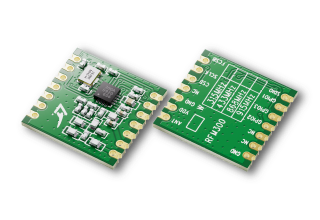
For example, the RFM68LC is a high-performance, low-power LoRa module based on the low-power LoRa transceiver LLCC68, suitable for various wireless applications in the 150MHz to 960MHz range.
The RFM68LC employs a highly integrated design, effectively simplifying peripheral circuitry, reducing component selection and RF development workload, helping developers shorten product development cycles and reduce overall system costs.

In terms of communication performance, the RFM68LC has a maximum transmit power of +22dBm and a receive sensitivity as low as -129dBm (BW=125 kHz, SF=9), which has strong signal reception capabilities and link budget advantages .
It can effectively improve the data transmission reliability of LoRa terminals in complex environments and improve link performance in indoor wall penetration, courtyard coverage and other medium and long distance communication scenarios.
In terms of operating power consumption, the RFM68LC receives a current of only 8.8mA (BW=125kHz ) . Simultaneously, the RFM68LC also supports Duty-Cycle operating mode, Channel Activity Detection (CAD), and high-precision RSSI detection, helping the system optimize RF transceiver timing according to communication needs, reducing unnecessary listening and transceiver operations , thereby reducing LoRa terminal power consumption and extending battery-powered terminal usage time.
It is particularly suitable for applications with high battery life requirements, such as smart water meters, gas meters, wireless sensors, and remote status monitoring.
In terms of modulation, the RFM68LC not only supports LoRa modulation technology, but also traditional modulation modes such as FSK and GFSK.
Developers can leverage the weak signal reception capability and long-distance communication advantages of LoRa mode, or choose the appropriate modulation mode according to the data rate, data format, and compatibility requirements of the existing system, thereby improving the flexibility of solution design and meeting the differentiated requirements of communication distance, transmission efficiency, and power consumption in different application scenarios.
In addition, in terms of system integration and development, the RFM68LC supports communication with the main control MCU through the standard SPI interface .
It also supports flexible configuration of key parameters such as operating frequency, transmit power, spreading factor, bandwidth and data rate through software, which helps developers optimize wireless link performance according to actual application needs.

https://www.hoperf.cn/service/apply/
If you are interested in the low-power LoRa module RFM68LC or other LoRa/LoRaWAN modules, please scan the QR code above or copy and open the link at the end of the article to apply for a sample. We will be happy to serve you.