HOT Search
Hot News

Product recommendation


As the vision of the Internet of Everything continues to advance, the deployment scenarios for communication terminals are rapidly expanding to sparsely populated or even uninhabited areas such as forests, deserts, oceans, and polar regions.
Although terrestrial communication networks, relying on the construction of high-density base stations, have achieved approximately 95% population coverage, their coverage capability is still essentially constrained by population distribution and infrastructure conditions, making it difficult to achieve direct and continuous network connections in these areas.
This has become one of the important factors restricting the large-scale development of the Internet of Things.

Against this backdrop, satellite communication, with its ability to cover all areas, is gradually becoming an important supplement to terrestrial networks.
Satellite communication does not rely on traditional terrestrial base station facilities and can directly cover areas that are difficult for traditional communication networks to reach.
Combined with low-power wide-area IoT technology, it can achieve an effective balance between cost, power consumption, and coverage.
For example, the LoRaWAN satellite communication solution, by introducing low-orbit satellite direct connection technology based on LR-FHSS (long-distance frequency hopping spread spectrum), can realize an integrated air-space-ground IoT communication system while maintaining low power consumption and low data rate characteristics.
It can be widely used in application scenarios such as asset tracking, environmental monitoring and maritime shipping.

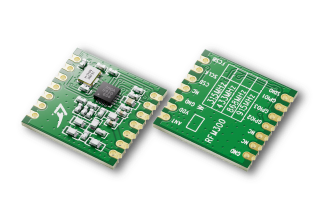
The RFM92LR is a low-power LoRa module launched to meet the aforementioned application requirements.
Developed independently by HOPERF based on the LR1121 chip, this module is designed for wide-area IoT and satellite communication scenarios, and features targeted optimizations in frequency band support, power consumption control, and communication flexibility .

RFM92LR - Typical Application Circuit
In terms of frequency band architecture design, the RFM92LR covers the Sub-GHz and 2.4GHz ISM bands, as well as the satellite S-band, and supports flexible switching of the transmission frequency band, which can effectively simplify the hardware structure and improve system integration and cost-effectiveness.
At the same time, the RFM92LR is also compatible with LoRa, (G)FSK modulation and Sigfox protocol, and can adapt to the spectrum environment of different regions and diverse application requirements.
The S-Band frequency band covered by the RFM92LR is located between the UHF and microwave frequency bands, which has both good propagation distance and penetration performance.
It also includes the frequency range commonly used in satellite communication, which can provide good physical layer support for low-Earth orbit satellite IoT applications and enable stable and reliable data transmission in remote and complex environments.
In terms of power consumption, the RFM92LR can flexibly adjust the transmit power (13dBm, 14dBm, and 22dBm) according to specific needs, with transmit current as low as 28mA @13dBm 2.4G, 30mA @14dBm Sub-1G, and 110mA @22dBm Sub-1G; and receive current as low as 6.8mA (2.4GHz mode) and 8mA (Sub-GHz mode).
Furthermore, the RFM92LR's sleep current is only 1μA, providing strong support for long-endurance applications such as sensors.
In terms of transmission rate, the RFM92LR offers flexible data transmission rate options to meet the needs of different scenarios (maximum rate: 62.5kb/s@LoRa Sub-1G, 101.5kb/s@LoRa 2.4G, 300kb/s@GFSK), and can reasonably optimize network resources, improve the stability of IoT communication systems, and further enhance their signal anti-interference capabilities.
Regarding receiver sensitivity, when the RFM92LR has a communication bandwidth of 125kHz and a spreading factor of SF12, the measured receiver sensitivity is as low as -138dBm (Sub-GHz band).
This feature ensures reliable signal reception and effectively solves the problem of signal stability for IoT devices under wide-area coverage.
In terms of hardware design, the RFM92LR incorporates a built-in 32MHz passive crystal oscillator, ensuring stable clock signal output and providing a reliable clock reference for the module's normal operation.
The RFM92LR also features a Sub-GHz/2.4GHz dual-antenna interface design, allowing users to flexibly choose between the Sub-GHz or 2.4GHz bands for communication based on their specific application scenarios and needs.
In addition, the RFM92LR module has taken full consideration of security and standards compatibility, fully complying with the LoRaWAN standard specifications defined by the LoRa Alliance, supporting the industry's mainstream AES-128 encryption/decryption algorithm, and strictly following the Alliance's specifications to handle core device identity parameters such as DevEUI and JoinEUI, ensuring that the device has reliable interoperability and legitimate identity in the LoRaWAN ecosystem.

https://www.hoperf.com/service/apply/
If you are interested in HOPERF's independently developed low-power LoRa module RFM92LR or other LoRa modules, please scan the QR code above or copy and open the link at the end of the article to apply for a sample. We will be happy to serve you!