HOT Search
Hot News

Product recommendation
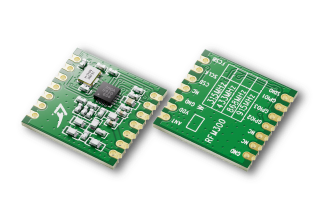
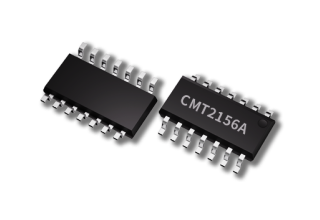


As the drone application market continues to expand into low-altitude scenarios and upgrade to more sophisticated operations, flight altitude, as one of the core performance parameters for measuring whether equipment can achieve precise, pinpoint operations, directly relates to the accuracy and safety of mission execution.
Whether it's stable hovering, smooth takeoff and landing, or close-range low-altitude operations, real-time perception and rapid response to altitude changes have become important reference indicators for evaluating the performance level of equipment flight control systems within the industry.

In actual UAV operating environments, low-altitude flight, indoor operations, and complex airflow conditions significantly impact the stability and measurement accuracy of satellite positioning systems.
Relying solely on GPS or other single positioning methods is insufficient to meet the demands of high-precision flight control.
Against this backdrop, integrating high-precision digital barometric pressure sensors into UAVs to provide continuous and stable altitude change information has become one of the effective technical approaches to improve the flight stability and control accuracy of the equipment.
By working in conjunction with digital barometric pressure sensors, inertial sensors, and satellite positioning modules, drones will be able to achieve safer, more reliable, and more intelligent flight control in a variety of complex environments.
As shown in the diagram below illustrating the functions and communication architecture of a drone system, precise altitude control of a drone cannot be achieved by a single functional unit; rather, it relies on the fusion of multi-source information.
Typically, the GPS unit provides an absolute altitude reference, the IMU is responsible for flight attitude and acceleration sensing, while the digital barometric pressure sensor provides continuous and detailed relative altitude information through high-resolution detection of changes in ambient air pressure.
Because atmospheric pressure exhibits a stable pattern with altitude, the barometric pressure sensor can detect minute altitude fluctuations in a short period of time.
This capability is particularly crucial for hovering control, smooth ascent, and precise landing.

When flying in complex scenarios such as urban canyons, indoor spaces, and low-altitude obstructions, drones are highly susceptible to GPS signal attenuation or even failure.
Under these conditions, by deeply fusing multi-source information—including altitude change data output from a digital barometric pressure sensor and data from an inertial measurement unit (IMU)—a stable and reliable altitude closed-loop control link can still be constructed. This ensures altitude control accuracy during GPS failure phases and improves flight stability.
In UAV system architecture, digital barometric pressure sensors are typically connected directly to the main control MCU via an I2C serial port.
The altitude data output by these sensors is fed into the flight control algorithm in real time for calculation.
Based on the altitude data output by the sensor, the system can extract the altitude change rate parameter, accurately identify fault states such as abnormal descent, rapid altitude loss, and unexpected climb, and trigger protection or attitude correction mechanisms.
This high-sensitivity detection capability for transient altitude changes provides reliable redundancy for stable flight of UAVs under complex conditions.
From a practical application perspective , drones place higher demands on digital barometric pressure sensors in terms of accuracy, stability, and system adaptability, as their performance directly affects the upper limit of the drone's altitude control capability.
Against this backdrop, the application value of high-performance digital barometric pressure sensors becomes increasingly apparent.
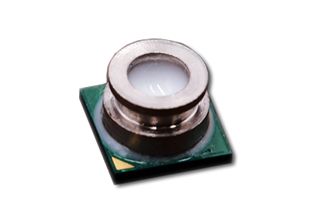
For example, HOPERF's self-developed HP303B is a digital barometric pressure sensor that uses capacitive sensing elements to simultaneously measure both air pressure and temperature, featuring low power consumption and high accuracy.
HP303B measurement data and calibration coefficients can be read via I2C or SPI interfaces , and the measurement status can be indicated by a status bit or triggered by an interrupt via the SDO pin , making it suitable for diverse industrial and consumer applications.

In terms of sensing accuracy, the HP303B boasts ultra-high pressure resolution and excellent relative accuracy, providing core technical support for the refined altitude control of UAVs.
This device achieves a pressure resolution of ±0.06 hPa, corresponding to centimeter-level altitude change recognition capability; coupled with a pressure measurement accuracy of 0.5 Pa RMS in high-precision mode, it enables the flight control system to accurately capture minute altitude fluctuations, effectively suppressing altitude drift and vibration issues in UAVs during hovering, low-speed ascent and descent, and near-ground flight.
In terms of measurement stability, the HP303B, based on capacitive sensing , maintains excellent measurement consistency across a wide temperature range.
Simultaneously, its pressure-temperature sensitivity is as low as 0.5 Pa/K, and it incorporates a built-in temperature measurement and real-time compensation mechanism to accurately offset the interference of ambient temperature differences on pressure measurements, ensuring the accuracy of altitude calculations.
This feature ensures that the UAV continuously outputs stable and reliable altitude data during missions with significant day-night temperature differences, frequent airflow disturbances, or long-endurance flights, greatly improving the safety and operational stability of the equipment.
In terms of power consumption and computing power optimization, the HP303B supports flexible configuration of multiple measurement accuracy and sampling rate levels, effectively helping the entire system achieve an optimal balance between measurement accuracy and power consumption control.
This feature is crucial for endurance-sensitive UAV platforms. Furthermore, the HP303B's built-in FIFO cache and interrupt output mechanism significantly reduce the polling frequency of the main control MCU, reserving more computing resources for core algorithms such as attitude calculation and path planning in the flight control system.

https://www.hoperf.com/service/apply/
If you are interested in HOPERF's independently developed high-precision digital barometric pressure sensor HP303B or other sensors, please scan the QR code above or copy and open the link at the end of this article to apply for a sample. We will be happy to serve you!