HOT Search
Hot News

Product recommendation
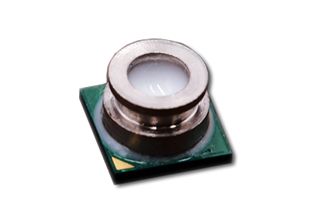
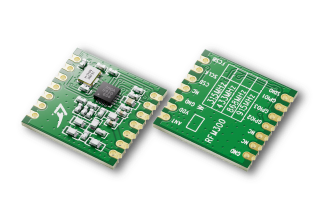
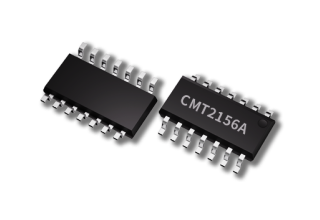


LoRa (LongRange) is a physical layer spread spectrum modulation technology based on CSS (Chirp Spread Spectrum) that can significantly improve the wireless communication range of IoT nodes. It is mainly suitable for low-frequency, low-data-volume, long-distance low-power wide-area networks (LPWANs).
Unlike narrowband modulation such as OOK, FSK, and MSK, LoRa mainly encodes data through a linearly varying "chirped signal," giving the signal an extended characteristic in the frequency domain. This results in significant spread spectrum processing gain, enabling reliable demodulation at low or even negative signal-to-noise ratios, and greatly improving anti-interference, anti-multipath, and anti-blocking capabilities.

Schematic diagram of the time-domain curve and frequency variation of the CSS modulated signal
This anti-interference capability, combined with the forward error correction (FEC) mechanism, enables LoRa receivers to achieve stable and reliable signal reception and data demodulation even in harsh signal-to-noise ratio environments as low as -20 dB, while maintaining low power consumption characteristics comparable to traditional narrowband modulation schemes such as FSK .
In addition, most LoRa-based chips/modules/IoT communication nodes have extremely high receiving sensitivity, typically reaching -130 dBm and below, making them one of the most widely adopted wireless communication solutions in fields such as smart agriculture, smart cities, and industrial IoT.
In practical applications, LoRa-based IoT nodes operate in the unlicensed ISM band, avoiding spectrum licensing costs and easily achieving ultra-long-range communication coverage of several kilometers in urban environments and tens of kilometers or more in rural environments.
Simultaneously, developers can flexibly apply duty cycle design (periodic wake-up + short burst communication) to significantly reduce node power consumption, enabling battery-powered nodes to have wireless communication endurance for several years.

As shown in the figure above, compared with common wireless communication technologies such as BLE, Wi-Fi, Thread, and NB-IoT, the wireless communication scheme based on LoRa modulation has a significant advantage in transmission distance.
In addition, its data rate throughput of 10kbps-50kbps can fully meet the transmission needs of small data volumes such as sensor data and status commands in IoT scenarios. Furthermore, its receiving sensitivity as low as -148dBm can further ensure the stability of signal reception in complex environments.
It can be argued that the LoRa solution fills the application gap between short-range wireless technologies (such as Wi-Fi and BLE) and cellular wide-area technologies (such as NB-IoT).
Especially in scenarios such as soil moisture monitoring in smart agriculture, smart street light management in smart cities, and remote equipment status monitoring in industrial IoT, the LoRa solution has become one of the mainstream choices for the implementation of low-power wide-area IoT due to its advantages of unlicensed frequency bands, easy deployment, and high reliability.
In the field of Low Power Wide Area Network (LPWAN), LoRa and LoRaWAN are two highly related but fundamentally different technology systems in terms of hierarchy, boundaries, and functional positioning.

LoRaWAN communication protocol stack diagram
LoRa is a modulation technology at the physical layer (PHY). Its core is a modulation scheme based on linear frequency modulation spread spectrum (CSS).
It only specifies the mechanisms for generating, spreading, modulating, and demodulating wireless signals, and defines physical layer parameters such as bandwidth, spreading factor (SF), and coding rate. It does not involve upper-layer protocol specifications such as link layer access control, frame format definition, or network layer routing and management.
Developers can build private communication links based on the LoRa physical layer to achieve point-to-point or star topologies without relying on standard MAC protocols.
LoRaWAN is a communication protocol stack built on the LoRa physical layer. Its protocol layer reuses LoRa modulation technology as the physical layer, while the upper layer defines a complete MAC layer (link layer) specification (including Class A/B/C device access modes, channel access control, adaptive data rate (ADR), frame encapsulation and security verification mechanisms), and is equipped with network layer and application layer interaction specifications, forming a complete LPWAN solution covering device access, data transmission and network management.
LoRa modulation uses multiple spreading chips to represent each bit of payload information, thus spreading the signal spectrum. The underlying transmission rate of the spread spectrum signal is the chip rate, and the transmission rate representing the effective data symbol is the symbol rate (Rs).
The spreading factor (SF) is defined as the ratio of the chip rate to the nominal symbol rate. Physically, it represents the number of spreading chips used to represent a single effective data symbol and directly determines the spreading gain, transmission distance, and data rate of the modulated signal.

Bandwidth (BW) refers to the radio frequency channel bandwidth occupied by the LoRa modulated signal, which determines the system's chip rate and signal frequency resolution. The bandwidth value directly affects the transmission rate, receiver sensitivity, and anti-interference performance of the communication link.
The larger the bandwidth, the higher the data transmission rate; the smaller the bandwidth, the higher the receiver sensitivity and the stronger the link coverage.
The coding rate (CR) is the ratio of information bits in LoRa forward error correction (FEC) coding to the total transmitted bits, used to describe the degree of channel error correction redundancy.
By introducing redundant coding, the coding rate can improve the signal's anti-interference and error correction capabilities in complex channel environments. The lower the coding rate, the stronger the error correction capability and the higher the link reliability; the higher the coding rate, the higher the effective data transmission efficiency.
LoRaWAN defines a low-power wide-area network communication system based on spread spectrum modulation. It adopts an open standard layered communication architecture, in which terminal nodes, gateways, network servers, and application servers work together to form a complete communication link.

LoRaWAN Network Architecture Diagram (Source: LoRa Alliance Official Website)
Its network topology is based on a star topology. Terminal nodes communicate with the gateway through wireless links. The gateway only performs transparent forwarding and does not participate in terminal addressing or data routing, which can realize concurrent access of multiple nodes and wide area coverage.
In terms of operation, LoRaWAN adopts a bidirectional asynchronous communication mechanism, supports multiple terminal working modes such as Class A, Class B, and Class C. Based on ALOHA random access, combined with adaptive data rate and channel frequency hopping mechanism, it can achieve long-distance, high-capacity, and highly reliable IoT data transmission while ensuring low power consumption.

Based on the aforementioned layered communication architecture, LoRa and LoRaWAN have formed a mutually beneficial relationship: the former provides long-range, low-power physical layer communication capabilities, while the latter provides a standardized and operational network architecture; together, they can build an IoT communication network that can cover a wide area and operate for extended periods.
Currently, these two technologies have been widely adopted in various fields such as smart agriculture, environmental monitoring, smart metering, asset tracking, and the Industrial Internet of Things.
It is worth mentioning that the implementation of any communication protocol and its solution requires a mature and reliable hardware module as support, and LoRa and LoRaWAN modules are the core carriers that connect technical concepts and application scenarios.
For example, HOPERF's independently developed RFM95W is a LoRa SPI module that adopts an advanced mixed-signal design, is based on a unique adaptive rate algorithm, and supports multiple frequency bands and multiple modulation methods (LoRa, (G)FSK, (G)MSK, OOK).
It can not only effectively improve the wireless communication link performance of IoT devices, but also cover communication scenarios from long distance and low speed to medium and short distance and medium and high speed, and its current consumption is significantly lower than other devices in the industry.

The core advantage of the RFM95W lies in its industry-leading communication range achieved through a maximum link budget of 164dB. This performance stems from the combination of a constant RF output power of +20dBm (100mW) and a receiver sensitivity as low as -144dBm. By adopting LoRa modulation, it can overcome the triangular trade-off between "distance, interference resistance, and power consumption" and ensure stable wireless signal transmission even in complex environments.
The RFM6601W is a high-performance LoRaWAN module that supports LoRaWAN node features and integrates a general-purpose MCU, RF transceiver, modem, and peripheral devices. It adopts an advanced mixed-signal design and has passed FCC/CE/IC certification. It is a wireless communication solution that combines core advantages such as ultra-low power consumption, long-distance communication, high sensitivity, strong anti-interference ability, and high integration.

The RFM6601W possesses inherent multipath interference resistance and penetration capabilities, enabling stable and accurate digital signal transmission even in low signal-to-noise ratio environments .
It offers a rich set of peripheral functions, including multiple general-purpose GPIOs, a 32.768 kHz external crystal oscillator, channel monitoring, high-precision RSSI measurement, and a 12-bit high-speed ADC and DAC .
In terms of battery life, the RFM6601W's transmit current is only 108mA @ +22dBm (3.3V) at 433.92MHz, the receive current is only 10mA @ 433.92MHz, and the sleep current is only 1.3uA. Furthermore, in Class A mode, it does not require wake-up monitoring (Class A devices automatically open two short receive windows once uplink transmission is complete), allowing for a battery life spanning several years.

https://www.hoperf.com/service/apply/
If you are interested in HOPERF' LoRa, LoRaWAN modules or other wireless communication chips/modules, please scan the QR code above or copy and open the link at the end of the article to apply for samples. We will be happy to serve you!
Reference: LoRa Alliance Official Website - Resource Library https://resources.lora-alliance.org/