HOT Search
Hot News

Product recommendation
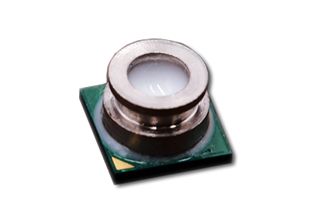
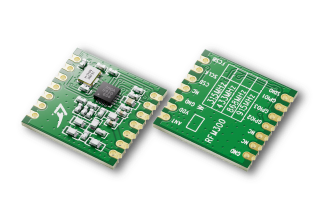
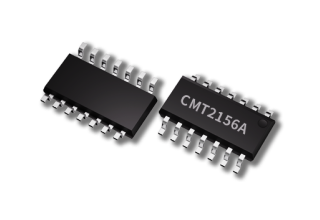


With the rapid development of contemporary Internet of Things (IoT) technology and the further prosperity of international trade, achieving multi-band compatibility and global communication capabilities on the same hardware unit has gradually become one of the requirements for cost reduction and efficiency improvement in industries such as asset tracking, deep-sea fishing, transnational shipping, cross-border logistics, and even international aviation.
It is also an important foundation for realizing device interconnection, data interoperability, and intelligent operation on a global scale.

A hardware unit with multi-band compatibility and global communication capabilities can not only achieve cross-regional data interoperability in complex and ever-changing global network environments , but also significantly improve communication reliability and data transmission efficiency through adaptive frequency band switching and link optimization mechanisms.
While reducing manual intervention and redundant deployment , it can effectively reduce the overall operating costs and maintenance complexity of various cross-border businesses.
For example, the RFM92LR, independently developed by Huapu Microelectronics based on the Semtech LR1121 chip, is HOPERF' first dual-band patch-type LoRa SPI wireless module capable of wireless communication in Sub-GHz, 2.4GHz, and satellite S-band (1.9-2.1GHz), covering global areas.
The RFM92LR features low power consumption and high performance, with maximum transmit power of 22dBm and 13dBm in the Sub-GHz and 2.4GHz bands, respectively; and a maximum receive sensitivity of -138dBm in the Sub-GHz band (BW=125KHz, SF=12).

RFM92LR - Default Typical Application Circuit
In terms of flexibility, the RFM92LR supports LoRa, (G)FSK, Sigfox and LR-FHSS modulation methods, and can achieve ecosystem compatibility with systems on platforms such as SX126x, SX127x and SX128x series.
This can significantly reduce the product development threshold and hardware adaptation costs, and effectively meet the needs of terrestrial wide-area IoT networking and S-band satellite direct communication.
In terms of speed and power consumption, the RFM92LR offers flexible data transmission rate options (62.5 kb/s @LoRa Sub-GHz, 101.5 kb/s @LoRa 2.4GHz, 300 kb/s @GFSK) to meet the needs of different scenarios; its transmit current is as low as 28mA @13dBm 2.4GHz, 30mA @14dBm Sub-GHz, 110mA @22dBm Sub-GHz; receive current is as low as 6.8mA @2.4GHz, 8mA @Sub-GHz; and sleep current is as low as 1uA.
In terms of application advantages, the RFM92LR complies with the physical layer requirements released by the LoRaWAN® Alliance. It can run the LoRaWAN protocol and also build private peer-to-peer communication, private star network or custom lightweight communication protocol, thus adapting to diverse networking needs.
In addition, the RFM92LR module has taken full consideration of security and standards compatibility. It fully complies with the LoRaWAN standard specifications defined by the LoRa Alliance, supports the mainstream AES-128 encryption/decryption algorithm in the industry, and strictly follows the alliance specifications to handle core device identity parameters such as DevEUI and JoinEUI, ensuring that the device has reliable interoperability and legitimate identity in the LoRaWAN ecosystem.
It can be said that hardware units with multi-band compatibility and full-domain communication capabilities can not only efficiently break down communication barriers between terrestrial and satellite networks, but also provide more flexible and efficient solutions for various cross-regional and cross-scenario services .
For example, in the field of multinational shipping and supply chain logistics , the RFM92LR can switch communication bands to flexibly adapt to various environments and regions : in urban streets and highway sections , it can communicate on the Sub-GHz band to achieve low-power long-distance transmission; in dense scenarios such as ports and warehouses, it can communicate on the 2.4GHz band to obtain higher speeds for near-field data synchronization; and in the high seas and uninhabited areas without terrestrial networks , it can transmit data uplink to low-orbit satellites via the S-band (1.9-2.1GHz) , relying on the integrated space-ground network to ensure the safety and controllability of related assets .

the fields of distant-water fisheries and marine monitoring , the RFM92LR can achieve stronger anti-interference capabilities and communication stability through LR-FHSS frequency hopping technology. IoT terminals such as fishing vessels and buoys that integrate the RFM92LR can upload relevant location information, environmental parameters and alarm data to low-orbit satellites without relying on expensive maritime communication equipment. This reduces operating costs and provides lightweight communication support for safe production and emergency rescue at sea .
Furthermore, since Sub-GHz radio spectrum regulations vary across regions globally (e.g., Europe primarily uses 868MHz , while North America primarily uses 915MHz), traditional single-band modules often require hardware customization based on the destination . However, the RFM92LR, with its multi-band compatibility , allows a single set of hardware to meet the deployment needs of the global market , significantly reducing hardware development and deployment costs and improving operational efficiency .

https://www.hoperf.com/service/apply/
If you are interested in HOPERF's independently developed low-power LoRa module RFM92LR or other LoRa modules, please scan the QR code above or copy and open the link at the end of the article to apply for a sample. We will be happy to serve you!