HOT Search
Hot News

Product recommendation


In the field of industrial motion control , servo drives are critical devices with extremely high requirements for response speed, control accuracy, and system reliability.
They are mainly responsible for generating PWM signals based on upper-level control commands and encoder feedback data, and for performing high-precision, high-response closed-loop regulation and driving of the position, speed, and torque of the servo motor.
They are the core control and power drive unit in the servo system that connects the upper-level control terminal (PLC/motion controller/industrial computer) and the servo motor.

servo driver
During the operation of a servo system, power devices such as IGBTs or MOSFETs generate significant common-mode noise and electromagnetic interference during high-frequency switching .
This interference not only exists in the power circuit but also propagates towards the control side along signal lines, ground lines , and parasitic capacitances. If this interference couples into the control system via the analog front-end or digital interface, it can lead to adverse phenomena such as jitter in current sampling results, encoder miscounting, or communication anomalies , and in severe cases , may even damage the control chip.
Therefore, at the boundary where strong and weak currents intersect, and in the control input, feedback signal and communication link , building a reliable electrical isolation barrier has become the mainstream solution for designing high-end servo drives .
As shown in the figure below, in the signal input/feedback link, when an external low-speed digital input signal, high-speed synchronization signal, or incremental encoder pulse signal enters the FPGA, the digital isolator/isolation interface chip can effectively block transient overvoltage, common-mode noise, and ground potential difference in the complex electrical environment on site, so that the control core always receives clean and reliable logic signals.

A schematic diagram of an electrical isolation scheme for a common servo driver.
In the power control chain, the PWM signal output by the FPGA needs to cross the strong and weak current boundaries, be sent to the gate drive circuit, and ultimately drive the IGBT or IPM module to complete the inverter control.
For servo systems, isolated driver chips can maintain reliable isolation in high dv/dt environments and ensure PWM timing consistency through small delay deviations and stable propagation characteristics, thus providing a solid foundation for the high-speed dynamic response of the servo system.
In the current/voltage sensing link, the servo driver needs to acquire the motor phase current and DC bus voltage in real time for current closed-loop control and system protection judgment.
An isolated sampling chip can accurately and safely transmit these signals from high-voltage, high-noise environments to the FPGA or DSP while ensuring electrical isolation , thus providing a reliable basis for algorithm decision-making.
It is worth mentioning that to achieve reliable isolation across the entire servo drive chain, engineers need to match dedicated isolation devices with high interference immunity, high voltage withstand capability, and low latency for different signal links.
For example, HOPERF has launched a series of digital isolators to meet the isolation requirements of various links in servo systems , which can build a reliable isolation and protection barrier for the stable operation of servo systems .

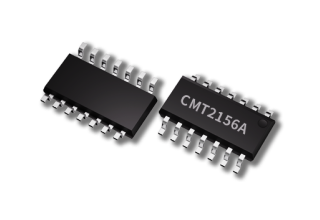
The CMT812X, CMT804X, and CMT826X are a series of standard digital isolators with different numbers of channels and directional configurations. They can flexibly adapt to the multi-signal isolation requirements of servo drives, and their high electromagnetic immunity and low radiation characteristics can effectively resist power module interference.
With a 5kVrms isolation voltage and comprehensive safety certifications, they can build a reliable electrical barrier in servo systems with mixed strong and weak currents.

The CMT8602X is a series of isolated driver chips with 3.75/5.75kVrms isolation withstand voltage, CMTI ≥ ±150kV/μs, and 4A peak source current and 6A peak sink current.
They can stably drive power switching devices in servo systems, support a maximum switching frequency of 5MHz, and, with parameters such as a typical propagation delay of 40ns, a minimum pulse width of 50ns, and a maximum delay matching of 5ns, effectively reduce switching losses and improve the operating efficiency of servo systems.

The CMT8308X is a series of isolated interface chips that integrate an RS-485 interface. They achieve a high degree of integration of digital isolation and physical layer interface functions within a single chip, enabling the direct construction of isolated communication links.
This effectively suppresses the impact of common-mode interference and ground potential difference on bus signals, and prevents abnormal voltage on the high-voltage side from being conducted to control and peripheral ports through the communication lines.
Its insulation voltage of up to 5kVrms, common-mode transient immunity of 200 kV/μs , and high-speed transmission capability of 12Mbps can not only meet the high-speed and stable transmission requirements of encoder feedback signals in servo systems , but also maintain the integrity of differential signals in complex electromagnetic environments, ensuring the reliability of communication links .

https://www.hoperf.com/service/apply/
If you are interested in HOPERF's independently developed series of digital isolators (basic isolation, isolation interface, isolation driver, isolation ADC/op-amp), please scan the QR code above or copy and open the link at the end of the article to apply for samples. We will be happy to serve you!