HOT Search
Hot News

Product recommendation


With the rapid development of IoT wireless communication technology, the number of low-power IoT devices is growing explosively, and their application scenarios are continuously expanding to various complex environments.
In this process, the limitations of traditional short-range wireless communication technology in terms of coverage are becoming increasingly apparent; while cellular communication solutions have the advantage of wide coverage, they also face problems such as high power consumption, strong network dependence, and complex deployment costs.

Therefore, achieving a balance between transmission distance, operating power consumption, and deployment cost has become one of the key factors restricting the implementation of current IoT infrastructure construction. LoRa, as a representative solution in low-power wide-area networks (LPWAN), has excellent long-distance transmission capabilities, extremely low operating power consumption, and a flexible and scalable network architecture, providing a more efficient and economical solution for the large-scale deployment of IoT.
LoRa is a modulation technology based on linear frequency modulation spread spectrum (CSS) , developed by Semtech in the United States , aiming to solve the balance between low power consumption and long-range communication for IoT devices.
Its core principle is to expand the signal bandwidth by loading narrowband information onto a wideband chirp signal for transmission, thereby giving the communication system stronger anti-interference capabilities and receiving sensitivity.
In open environments, LoRa - based communication distances can reach several kilometers or even tens of kilometers , making it particularly suitable for IoT applications with large-scale, low-rate, and low-frequency data interaction.
Furthermore, due to the highly diverse nature of IoT applications, different industries have different needs for network architecture, data security, device management methods, and deployment models. LoRa modules developed based on LoRa not only have complete radio frequency transceiver functions, but also have high configurability.
They can simultaneously support the globally universal LoRaWAN standard protocol and private/proprietary protocols developed for industry applications, helping users choose a networking solution that better suits their specific needs based on their specific scenarios.

LoRa modules are compatible with LoRaWAN and its various proprietary protocols.
Among them, LoRaWAN network has advantages such as open standards, mature ecosystem, and multi-vendor compatibility. It supports large-scale terminal device access and unified management, and can provide a stable, secure and scalable network foundation for long-term operational IoT projects, reducing the complexity of project construction.
It is especially suitable for scenarios with high requirements for communication distance and device battery life, such as smart city infrastructure management, smart meter reading, environmental monitoring systems, agricultural sensor networks, asset tracking and location management.
Private / proprietary protocol networks do not rely on public network infrastructure and can help users build independent, secure, and controllable wireless communication systems.
Compared with standardized network solutions, private / proprietary protocols can flexibly define communication processes, data formats, device authentication mechanisms, and network management strategies according to specific business needs, thereby achieving a higher degree of system autonomy and flexible business customization capabilities.
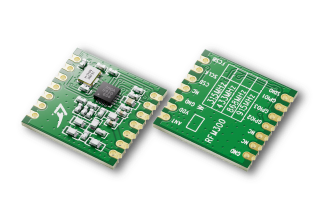
It is worth mentioning that any communication solution ultimately needs to rely on high-performance hardware to be realized. The RFM90C is an ultra-low power, high- performance LoRa transceiver module developed based on the Semtech SX1262 transceiver chip.
It is suitable for a variety of wireless application scenarios from 150MHz to 960MHz , supports major Sub-1GHz ISM bands worldwide, and does not require redesigning hardware for different regions, which can effectively reduce the cost of global product deployment.

In terms of wireless communication performance, the RFM90C can achieve a transmit power of up to +22dBm through a high-efficiency integrated power amplifier and supports a receive sensitivity of up to -137dBm (SF=12, BW=125KHz). It has excellent link performance and can maintain excellent long-distance communication capabilities in complex environments, easily covering a wide range of scenarios such as urban buildings, outdoor farms, and industrial plants.
In terms of operating power consumption, the RFM90C supports multiple transmit currents, including 120mA@433MHz, 145mA@868MHz, and 145mA@915MHz, and receives currents as low as 8.8mA (BW=125KHz).
It also supports sleep currents of 160nA ( DutyCycle=OFF ) and 600nA ( DutyCycle=ON ), which can effectively reduce the communication power consumption of IoT devices and significantly extend the battery life of battery-powered devices.
In addition, the RFM90C also supports Duty-Cycle operating mode, channel monitoring, high-precision RSSI, power-on reset, squelch output and other functions, making application design more flexible and enabling product differentiation design .
It also supports Channel Activity Detection (CAD) function, which can accurately identify the presence of LoRa signals, avoid channel conflicts and improve the coexistence performance of multiple devices.

https://www.hoperf.cn/service/apply/
If you are interested in HOPERF's independently developed high-performance LoRa module RFM90C or other LoRa/LoRaWAN modules, please scan the QR code above or copy and open the link at the end of the article to apply for a sample. We will be happy to serve you.