HOT Search
Hot News

Product recommendation


From single-point data collection to global collaboration, from proprietary protocols to standard interconnection, from smart metering to smart cities, how can network communication remain stable when the number of nodes in a wireless network grows from tens or hundreds to thousands, tens of thousands, or even larger?
How can nodes collaborate? Can node failures be automatically diagnosed and recovered? How can nodes be efficiently integrated into existing IP networks and digital platforms? These are all core issues that need to be addressed when building large-scale Internet of Things (IoT) networks.

Among numerous wireless protocols, Wi-SUN (Wireless Smart Ubiquitous Network) is one such solution that effectively addresses the aforementioned issues in large-scale, low-power wireless mesh networking. Based on IEEE 802.15.4g, IEEE 802.15.4e, and IETF IPv6 standards, it operates in the Sub-1GHz band. A single FAN (Field Area Network) can support over 3000 nodes and can be widely applied in smart lighting, smart grids, smart cities, and other fields.
The Wi-SUN technology system comprises two core profiles: Wi-SUN HAN (Home Area Network) and Wi-SUN FAN (Field Area Network). Among them, Wi-SUN FAN (Field Area Network) is the core highlight of Wi-SUN technology, designed specifically for large-scale outdoor IoT scenarios.
As shown in the figure below, unlike the traditional star network topology, Wi-SUN FAN does not require every terminal to be directly connected to the central node. Instead, it can build a multi-hop wireless mesh network through different types of nodes such as Border Router, Router, and Leaf.
Therefore, the network coverage of Wi-SUN FAN is no longer simply limited by the wireless communication distance of a single node, but can be continuously expanded with the number of network nodes and the deployment method.

Wi-SUN FAN (Field Area Network) diagram
Meanwhile, Wi-SUN FAN supports frequency hopping, allowing nodes to switch between multiple channels according to a certain frequency hopping sequence to improve anti-interference capabilities and link reliability.
In terms of modulation and data, Wi-SUN FAN supports both FSK and OFDM modulation methods, with transmission rates ranging from 50 kbps to 2.4 Mbps, which can be flexibly selected according to the application scenario.
In the Wi-SUN FAN network, multi-hop relay is its core communication mechanism. Node data can be transmitted via multi-hop, supporting up to 24 hops. In vast outdoor scenarios, the communication distance of a single device may only be a few hundred meters, but through the relay of multiple routing nodes, data can cross distances of several kilometers or even tens of kilometers to reach the edge router.

Wi-SUN Mesh multi-hop routing mechanism (data starts from L4, passes through R2 and R1 hop by hop to the border router)
Furthermore, the Wi-SUN FAN specification explicitly designates RPL (IPv6 Routing Protocol for Low-Power and Lossy Networks) as its network layer routing protocol. RPL is designed specifically for low-power lossy networks and uses a directed acyclic graph (DODAG) rooted at the border router to build a multi-hop mesh topology.
When a node fails or goes offline, the Wi-SUN FAN network automatically triggers route reconstruction based on the RPL mechanism: child nodes reselect uplink parent nodes from the candidate parent node list, and if necessary, initiate local or global DODAG repair, recalculate the topology path, allow data to "detour," and automatically find alternative paths.
This "self-healing" capability is crucial in scenarios with extremely high reliability requirements, such as smart grids and industrial automation.
It's worth mentioning that Wi-SUN FAN also has a key advantage: the IP-enabled capabilities brought by IPv6.

Wi-SUN Protocol Stack
IPv6 uses a 128-bit address length, and Wi-SUN FAN can theoretically provide approximately 3.4 × 10³⁸ addresses , allowing each electricity meter, street light, and sensor to have a unique IP identifier and be managed via IP. Wi-SUN FAN is built on IPv6/6LoWPAN/RPL, and each node in the Wi-SUN FAN network has an IP identity.
The application layer enables end-to-end communication—the Border Router node serves as the boundary router between the on-site IPv6 Mesh network and the upper-layer IP network, effectively simplifying the architecture, improving transmission efficiency, and enhancing security.
Meanwhile, Wi-SUN FAN leverages 6LoWPAN to carry IPv6 over low-power wireless networks, seamlessly integrating into existing IP infrastructures. It eliminates the need for parallel networks, enabling seamless interoperability with enterprise intranets, cloud platforms, and data centers. This makes it a natural extension of IP networks to the Internet of Things (IoT), supporting a smooth evolution from smart metering to smart cities.
As a member of the Wi-SUN (Wireless Smart Utility Network Alliance), HOPERF is committed to promoting the application of the Wi-SUN protocol in the global market. At the same time, it is continuously optimizing and iterating its own Wi-SUN products to help customers build more stable, timely and reliable Wi-SUN FAN networks.
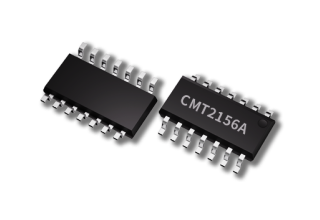
For example, the CMT2310A is a Wi-SUN FAN 1.0 PHY certified, mass-producible, and deliverable Sub-G FSK transceiver. The CMT2310A uses a 32MHz crystal to provide the PLL reference frequency and digital clock, supports both Direct and Packet data processing modes, and boasts up to +20dBm transmit power and -122dBm sensitivity, significantly optimizing link performance for various wireless applications.

The CMT2310A provides driver and interoperability support for customers with existing Wi-SUN protocol stacks. Wi-SUN FAN, based on mesh networking, boasts excellent scalability and interoperability.
Combined with the CMT2310A's ultra-low operating power consumption, it can be widely used in communication devices such as smart meters and Home Intelligent Energy Management (HEMS) controllers to create more reliable large-scale IoT networks.
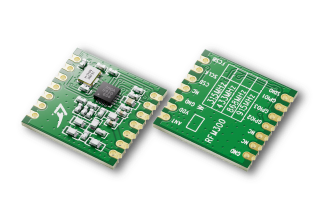
The HM-WS-001 is another transparent transmission module that fully complies with the Wi-SUN FAN1.0 specifications and functional requirements. Its radio frequency communication bands are 868MHz and 915MHz; the maximum transmit power is 20dBm, and the maximum receive sensitivity is -107 dBm (868MHz, 50kbps, 25KHz); it has advantages such as long-distance communication, ultra-low power consumption, and integrated transceiver.

Based on the Wi-SUN FAN mesh network, the HM-WS-001 can establish multiple connections with a large number of surrounding devices, extending communication distance by relaying data through multiple links.
Furthermore, the HM-WS-001 has passed Wi-SUN Alliance application certification and obtained certification, making it widely applicable in smart metering, smart lighting, smart homes, smart security, industrial automation control, energy management and monitoring in the new energy field , and other IoT communication application scenarios.

HM-WS-001 Product Block Diagram
Looking ahead, with the accelerated development of smart cities globally and the rapid popularization of IoT technology, the Wi-SUN (FAN) protocol is expected to penetrate more traditional industries, connecting various urban infrastructures with data, promoting the efficient integration and optimized allocation of urban resources, injecting continuous momentum into the sustainable development of smart cities, and driving cities towards a more intelligent, efficient, and livable direction.

https://www.hoperf.com/service/apply/
If you are interested in HOPERF's independently developed CMT2310A, HM-WS-001, or other Sub-1GHz RF chips/modules, please scan the QR code above or copy and open the link at the end of the article to apply for samples. We will be happy to serve you!