HOT Search
Hot News

Product recommendation
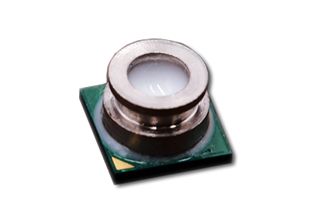
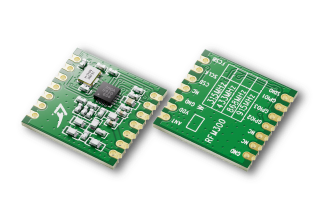
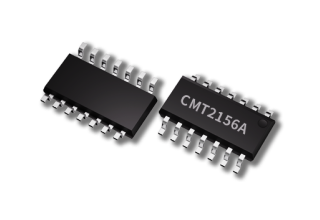


With the rapid development of IoT applications such as smart meters, smart fire protection, smart agriculture, and smart cities, more and more terminal devices need to have long-distance, low-power, and highly reliable wireless transmission capabilities in complex environments.
Especially in typical scenarios such as water meters, gas meters, electricity meters, smoke detectors, and fire monitoring, the number of terminal devices is often large, their deployment is scattered, and they mostly rely on batteries for long-term operation, which poses a severe challenge to the power consumption and communication stability of the devices.

However, traditional wireless solutions such as Wi-Fi, BLE, and proprietary FSK protocols have significant limitations in terms of communication range, operating power consumption, network capacity, and deployment cost, making it difficult for them to meet the above requirements. Therefore, how to enable massive terminals to achieve "reliable connectivity, long-range transmission, and long-lasting operation" has become a core proposition in designing LPWAN networking solutions.
In response to this market pain point, the HOPERF RFM6601 low-power LoRaWAN module, developed based on the ASR6601 SoC, is an integrated wireless communication solution built for large-scale networking.
The RFM6601 supports mainstream global ISM bands such as 433.92 MHz, 470 MHz, 868 MHz, and 915 MHz. It has a built-in complete LoRaWAN protocol stack and can work with gateways and servers that comply with the LoRaWAN standard, making it suitable for wide-area deployments with a large number of terminals accessing the network.

In terms of RF performance, the RFM6601 supports a maximum transmit power of +22 dBm and a receive sensitivity as low as -138 dBm (@SF=12, BW=125KHz). This means that under reasonable frequency band, antenna, spreading factor and network planning conditions, LoRaWAN networks built based on the RFM6601 can obtain a large communication link margin, thereby effectively improving the wireless communication reliability of terminal devices in complex environments.
For distributed terminals such as smart meters, fire smoke detectors, and agricultural sensors, a larger link budget means that LoRaWAN will have a longer communication distance, stronger signal coverage, and greater network deployment freedom.
Therefore, whether in urban buildings, underground spaces, or rural areas, industrial parks, or farmland, the RFM6601 can provide terminal devices with a communication foundation for long-distance wireless transmission.
In terms of operating power consumption, the RFM6601 integrates a high-performance MCU and LoRa RF unit, which can complete a series of processes such as data acquisition, protocol processing, wireless communication and low power management within the module. Its typical RF receive current is as low as 10 mA, and the sleep current is only 1.3 μA (without RF and RTC configured).
For battery-powered IoT terminals, they typically operate in modes such as periodic data collection, timed reporting, and event triggering. They do not require continuous high-speed data transmission and can switch reasonably between "collection-reporting-sleep".
This working mechanism, combined with the extremely low operating power consumption of the RFM6601, can effectively reduce the average power consumption of the system, improve the battery life of IoT terminals, and reduce the frequency of on-site battery replacement and maintenance.
Meanwhile, the RFM6601 also provides a wealth of peripheral functions, including multiple general-purpose GPIOs, a 32.768kHz external crystal oscillator, channel listening, high-precision RSSI, and a 12-bit high-speed ADC and DAC; these peripheral functions can help developers reduce the number of peripheral devices in the system, supporting the miniaturization and low-cost design of end products.
For large-scale IoT, the standardized LoRaWAN network supported by the RFM6601 helps terminals, gateways, and cloud platforms form a clearer network architecture.
As shown in the figure below, the LoRaWAN communication architecture decouples wireless communication on the terminal side from the backend IP network connection, allowing a large number of low-power terminals to access the management platform through a limited number of gateways, thereby achieving reliable and stable large-scale deployment.

Taking smart metering terminals such as water meters, gas meters, and electricity meters as examples, users do not need to deploy cellular communication links or lay dedicated communication lines for each meter.
They only need to deploy a small number of LoRaWAN gateways in residential communities or industrial parks to achieve wide coverage and unified aggregation of all metering nodes in the area.
The terminal device is battery powered and can maintain a low-power sleep state for a long time. It only wakes up during the preset meter reading cycle and uploads metering data at regular intervals.
It also supports immediate wake-up and proactive alarm reporting in case of abnormal events such as backflow of traffic, low battery voltage, or unauthorized opening of the cover, ensuring data integrity and device security.
The management platform leverages the adaptive data rate (ADR) mechanism of the LoRaWAN standard to dynamically adjust the transmission rate and power based on the signal quality between the terminal and the gateway, balancing communication penetration and energy consumption in complex environments such as dense buildings or underground meter wells.
At the same time, the platform can also receive uplink data from the same terminal through multiple gateways to achieve redundancy verification and accurate positioning, effectively avoiding data packet loss and missed meter readings.
In addition, water, gas, or power companies can use LoRaWAN downlink communication capabilities to remotely control valves, reset parameters, and upgrade firmware remotely on terminals without the need for on-site meter reading or manual operation.
This upgrades the traditional meter operation mode of "periodic inspection and manual reading" to a digital management system of "automatic reporting, intelligent analysis, and remote control," truly achieving high reliability, low maintenance costs, and full lifecycle manageability and controllability under large-scale deployment.
For various specific applications, a truly valuable wireless communication solution not only needs to transmit over long distances, but also needs to have low power consumption, high reliability, controllable deployment costs, and the ability to support large-scale terminal access.
The RFM6601 is built on the ASR6601 SoC, which highly integrates MCU, RF and modulation/demodulation capabilities, and combines high sensitivity, low power consumption and rich peripherals to provide a reliable wireless communication foundation for the next generation of LoRaWAN IoT terminals.

https://www.hoperf.com/service/apply/
If you are interested in Huapu Microelectronics' LoRa, LoRaWAN modules or other wireless communication chips/modules, please scan the QR code above or copy and open the link at the end of the article to apply for samples. We will be happy to serve you!